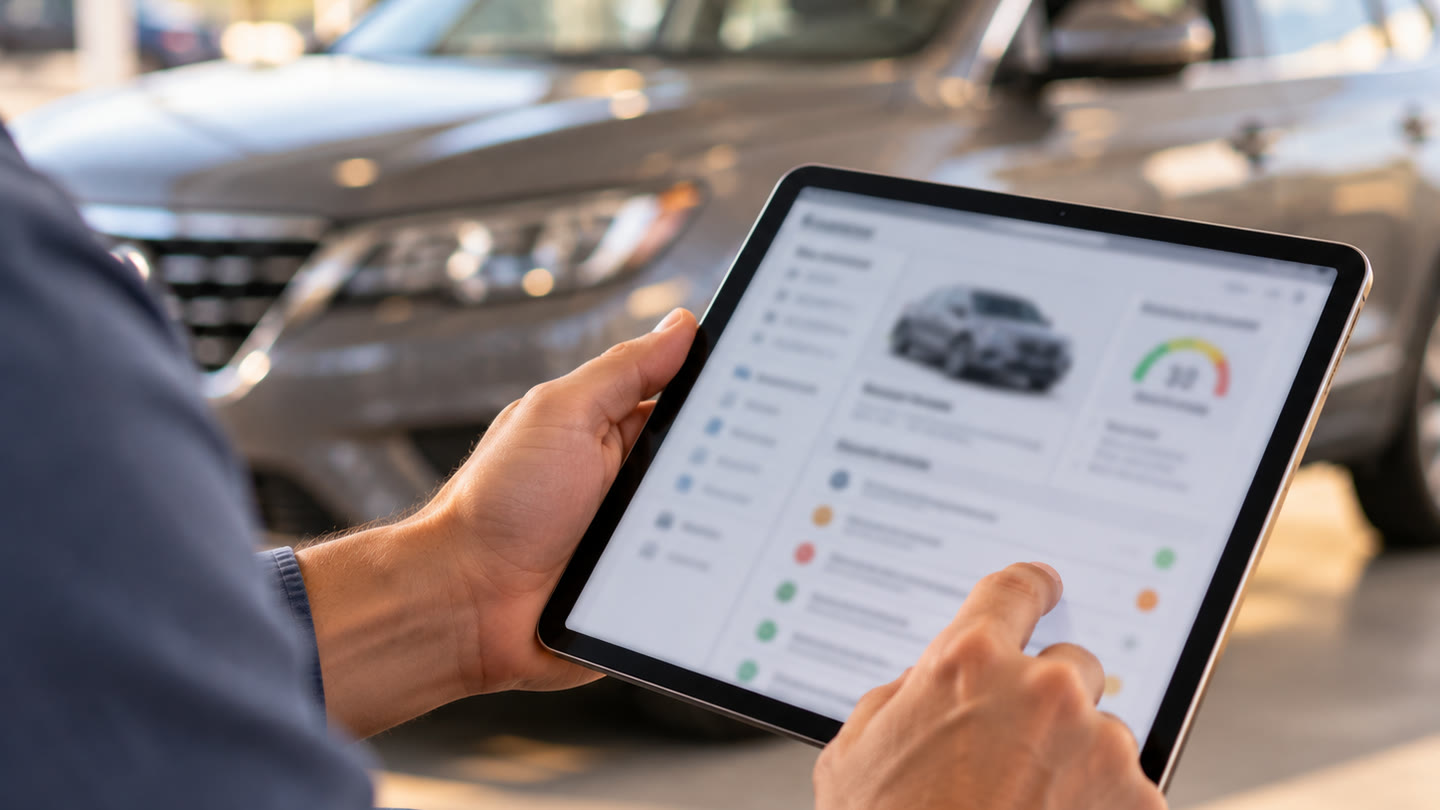
What a history report is built from
A vehicle history report compiles records tied to a vehicle's VIN from sources like state title and registration records, insurance claims, auction records, and reported service visits. It's a useful window into a vehicle's past, assembled from whatever's been reported — not a complete, guaranteed record of everything that ever happened to it.
What it typically shows
- Title history — how many owners, and whether the title has ever been marked salvage, rebuilt, flood-damaged, or similar
- Reported accidents — incidents that were reported to insurers or law enforcement
- Odometer readings over time — a way to spot a rollback or an inconsistency
- Service records, where they were reported to the provider compiling the report
- Registration history, including which states the vehicle has been registered in
What it typically won't catch
- Accidents or damage that were never reported to an insurer or authority, including cash repairs paid out of pocket
- The actual mechanical condition of the vehicle today — a clean history report doesn't mean a mechanically sound vehicle
- Maintenance that was never logged with a shop that reports to these services
That's why a history report and a pre-purchase inspection do different jobs — one tells you what's on the record, the other tells you the vehicle's actual current condition.
Free places to start
Before paying for a full report, our VIN Decoder can identify a vehicle's year, make and model (and often trim) from its VIN, and Recall Research shows official recalls issued for that year/make/model at no cost — to confirm whether a recall is still open on that exact vehicle, use NHTSA's VIN lookup.
For title history specifically, the U.S. Department of Justice runs the National Motor Vehicle Title Information System (NMVTIS), a federal database of title records, including salvage and junk brands reported by states, insurers and salvage yards. Reports drawn from it are available through approved providers linked from that site.
Free. See its recalls, factory coverage and a Protection Check — no phone number needed.